
Culinary or cosmetic argan oil?
The difference comes down to one step: roasting. For culinary oil, the kernels are lightly roasted before pressing, which develops the characteristic nutty taste. Cosmetic oil is pressed from raw kernels: it is almost odourless and is not for eating.
How to use argan oil in cooking
- Raw, as a finishing oil: on salads, vegetables, couscous and tagines just before serving.
- At breakfast: on warm bread, with honey.
- In amlou: the Berber spread of argan oil, roasted almonds and honey.
- Avoid frying and high-heat cooking, which destroy its aromas.
Composition
Argan oil is rich in unsaturated fatty acids (oleic and linoleic acids) and vitamin E (tocopherols). It is used in small amounts, as a finishing oil.
Choosing an argan oil
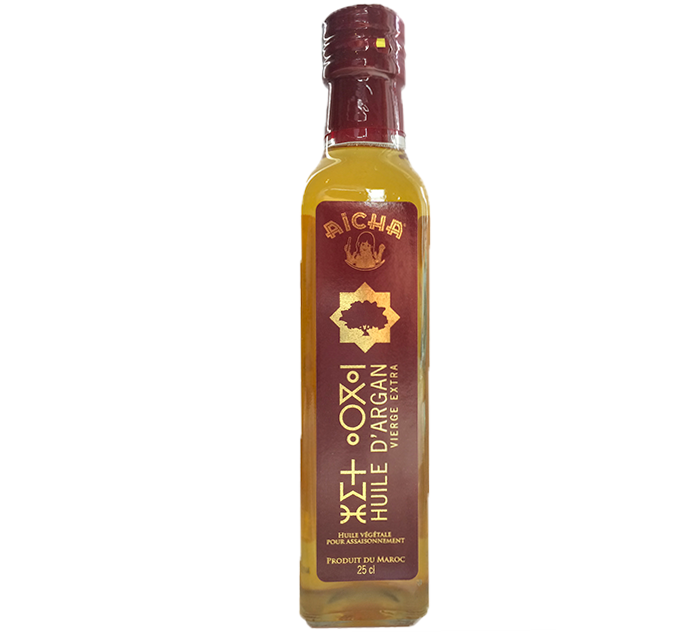
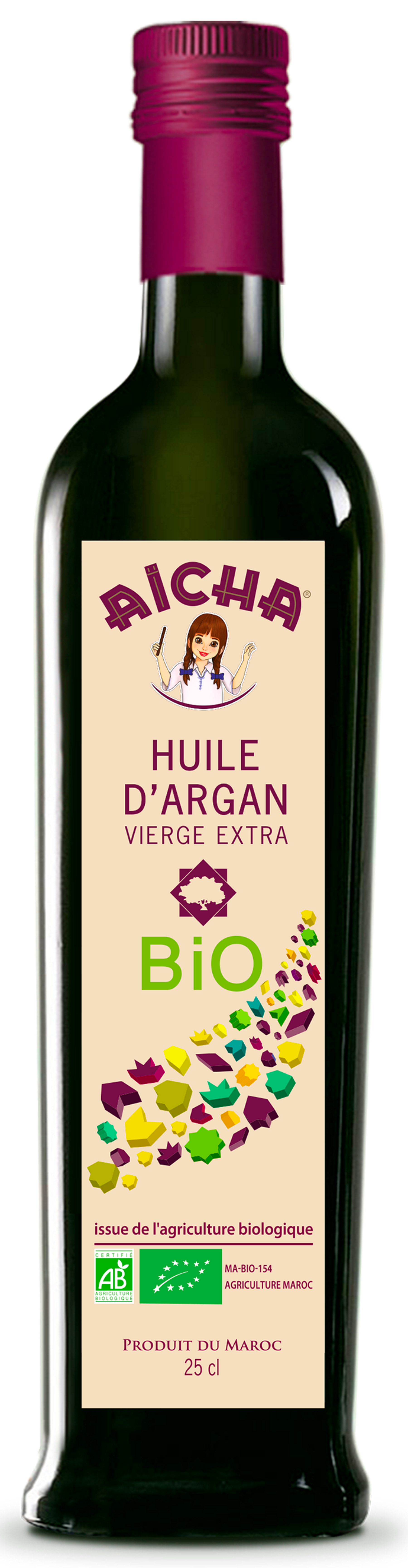
Look for 100% argan oil, golden in colour, bottled in glass and protected from light. We supply Aïcha organic argan oil and traditional argan oil in 100 ml bottles, for delicatessens and specialist distribution.
Updated 11 October 2026 by the COPRAM team