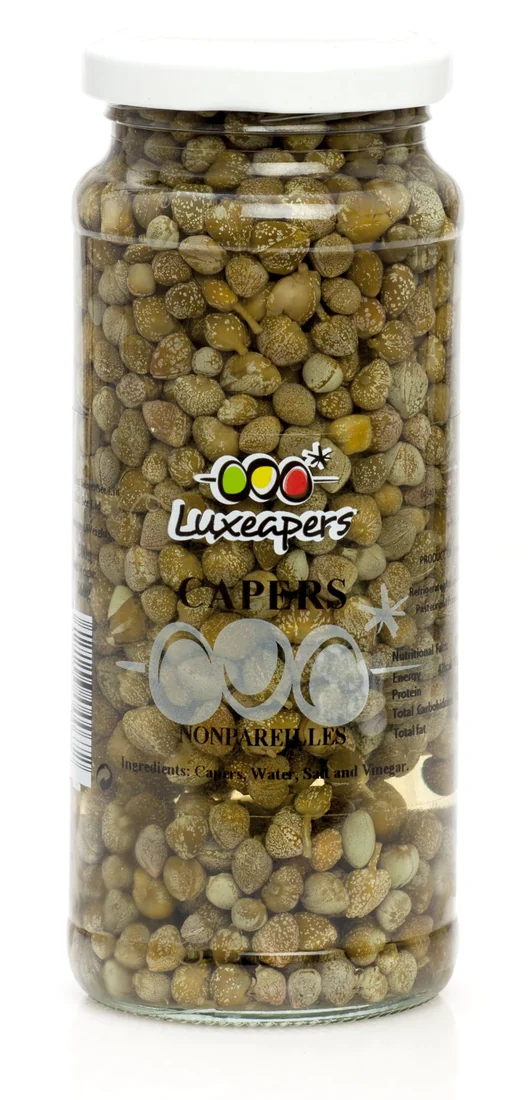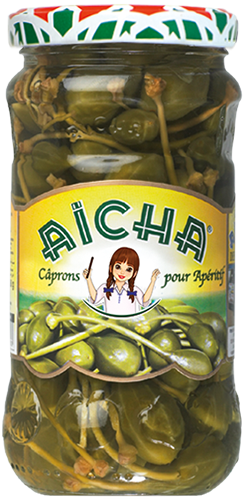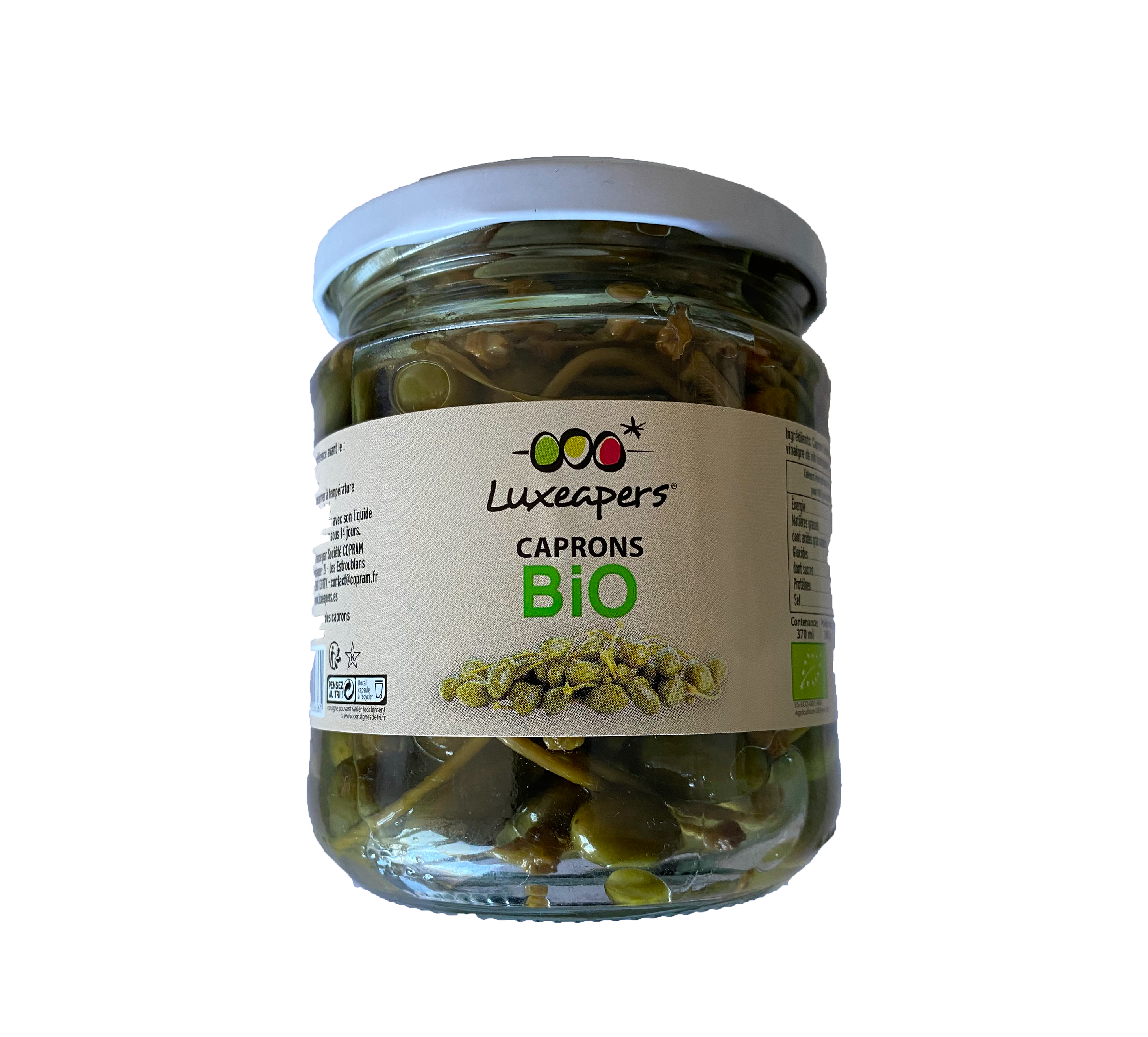

Caper size chart
Capers are graded by diameter, to the millimetre. Each grade has a trade name used across Europe and in export markets:
| Grade | Diameter | Character and uses |
|---|---|---|
| Nonpareille | 7 mm and under | The finest and most expensive. Delicate taste, ideal for sauces, garnishes and fine dining. |
| Surfine | 7–8 mm | The best balance of finesse and price; the best-selling retail grade. |
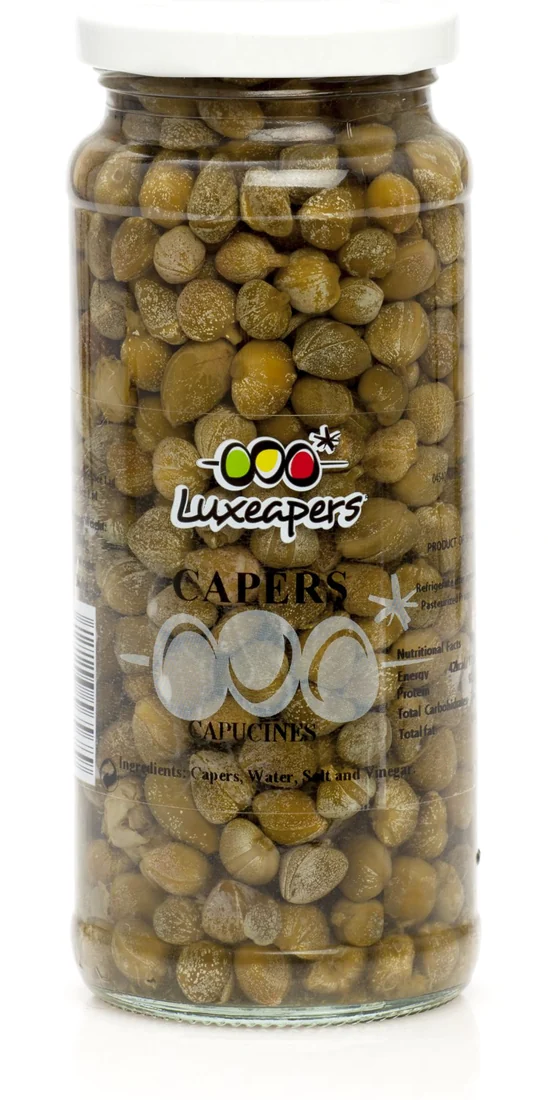
| Capucine | 8–9 mm | Plumper, for salads, cooked dishes and pizza. |
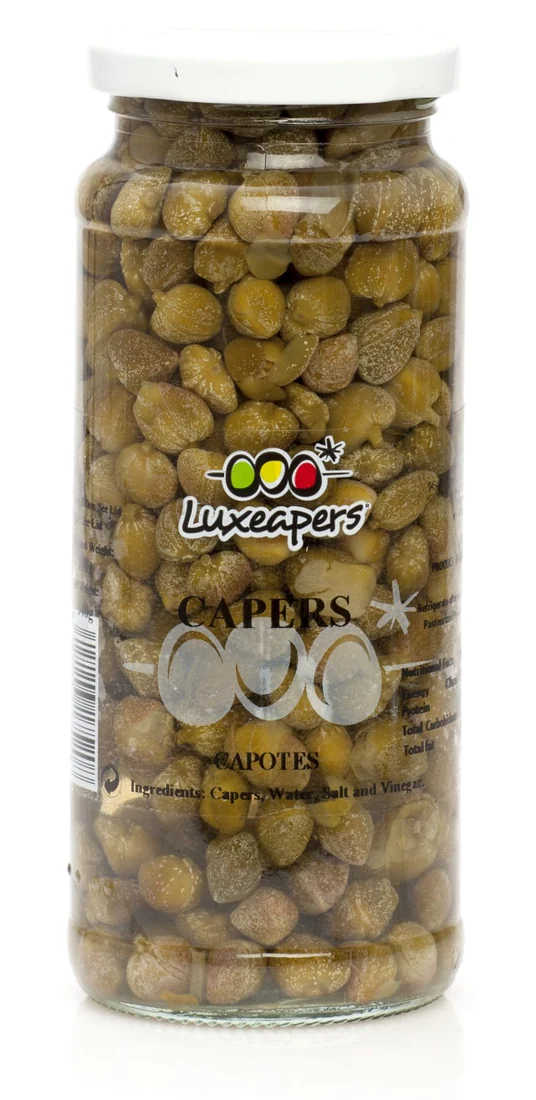
| Capote | 9–11 mm | Stronger taste, for cooking and foodservice. |
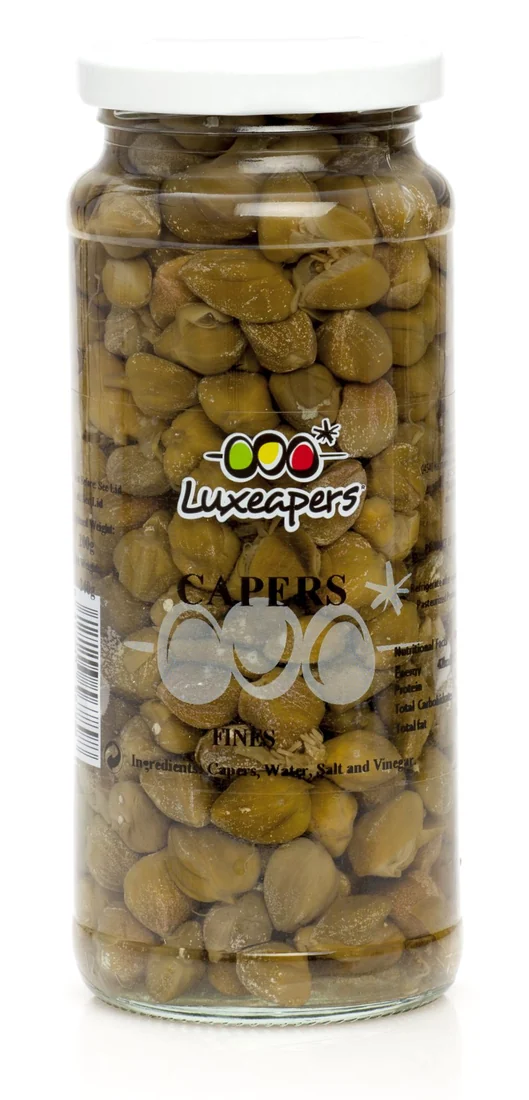
| Fine | 11–13 mm | The largest capers, economical, for industrial preparations and sauces. |
Capers vs caperberries
The caper is the flower bud; the caperberry is the fruit of the caper bush, which forms if the flower is left to bloom. Caperberries are much larger, keep their stem and contain small seeds. They are mostly served as an appetizer, like olives. See our caperberries.
Brined or salted?
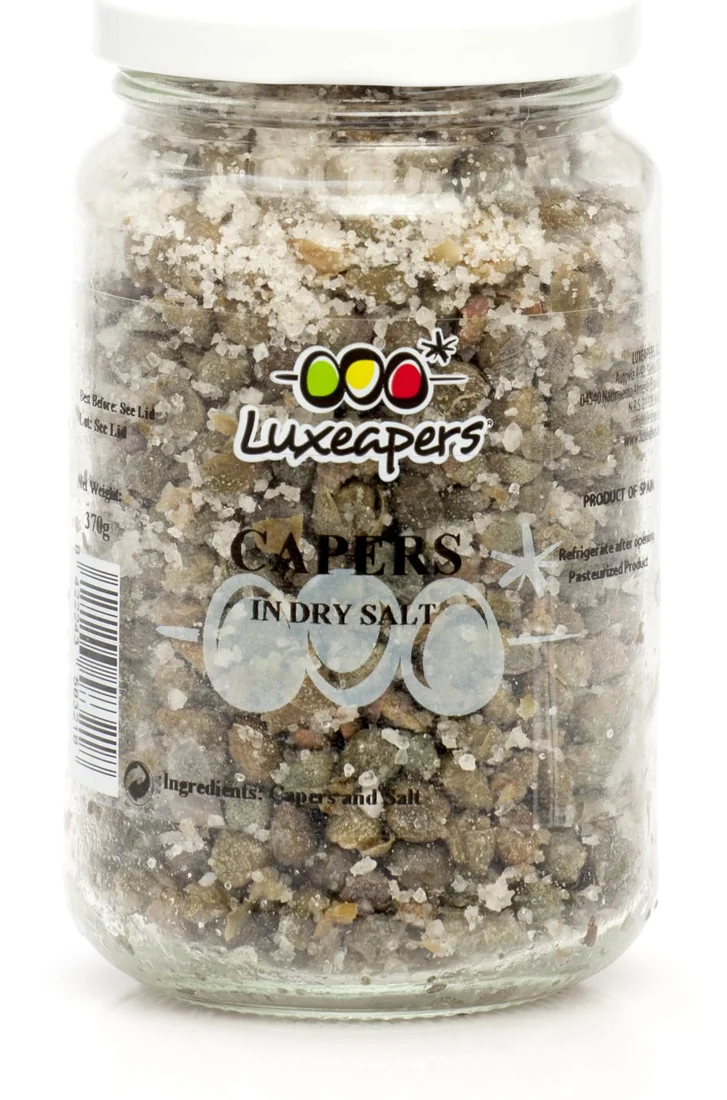
Most capers are preserved in vinegar brine: they are ready to use, simply drain them. Salted capers keep a more floral, purer taste favoured by chefs; rinse them in cold water for a few minutes before use.
Why Moroccan capers?
The caper bush grows wild in Morocco’s dry regions. Picking is done entirely by hand, every morning from May to September. This abundant production makes every size grade available all year round, from small jars to 4.5 kg gallons.
Choosing the right pack size
All our capers are listed in the capers category. For prices, send us a quote request.
- Retail: 60 g to 370 ml jars, mainly nonpareille and surfine.
- Foodservice: ¼, ½ and 1 gallon, in capucine, capote and fine grades (see our foodservice pack size guide).
- Food manufacturing: large containers, fine and capote grades.
Updated 11 October 2026 by the COPRAM team